Showing posts with label Notes on Reading (and Writing). Show all posts

Monday, July 1, 2019

Midnight at the Blackbird Cafe and Other June Reads


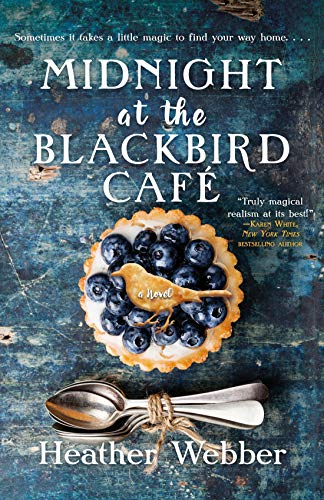
Image result for midnight at the blackbird cafeI finished 11 books in the month of June:

Transforming Classroom Grading by Robert J. Marzano
Don Quixote by Miguel de Cervantes
Sawkill Girls by Claire Legrand
How to Teach so Students Remember by Marilee Sprenger
The Time Traveler’s Wife by Audrey Niffenegger
This Savage Song by Victoria Schwab
Personalizing the High School Experience by Joseph DiMartino and John H. Clarke
Whisper Network by Chandler Baker (eARC)
Research-Based Strategies to Ignite Student Learning by Judy Willis, M.D.
Midnight at the Blackbird Cafe by Heather Webber (ARC)
Crime and Punishment by Fyodor Dostoevsky

This month has been a strange mix of classics I somehow managed to miss reading in high school, new(ish) releases, and craft books. Otherwise known as summer of a high school teacher!

My favorite ARC this month was Midnight at the Blackbird Cafe. I’ve included my full review below.
My review for Whisper Network can be found here.

I received a copy of Midnight at the Blackbird Cafe by Heather Webber from the publisher (Forge) in exchange for an honest review. Midnight at the Blackbird Cafe is scheduled for release on July 16, 2019.

Midnight at the Blackbird Cafe follows two young women in a small Alabama town. Anna Kate is a temporary addition to the community, only in town to settle her grandmother’s estate, which includes a required stint running The Blackbird Cafe. Natalie is a local girl who moved away and is back again. Most of our time is with Anna Kate, following her as she struggles to figure out what relationships she wants with the members of the small community (including her father’s family), and who she wants to be herself.

For me, the best part of this book was the town of Wicklow. It’s a small southern town that has begun to collapse as people and jobs move away. It’s a town steeped in sweet tea, gossip, and magic. Much of the story takes place in the cafe, focusing on the quirky mix of people that spend time there. I felt like I knew that place. Like I could find Wicklow on a map and show up on the doorsteps of the cafe any given morning and be able to identify the people I saw through the window.

There are definitely some southern stereotypes in the cast of characters. What made them work is the characters seeing their own behaviors and beginning to question them, beginning to change and grow. I would have like to see a little more development of some of these characters, particularly Natalie. She is presented to us as a primary character, but I didn’t feel like I knew her as well as Anna Kate at the end.

The plot of this story does contain some mystery. In a town that seems to thrive on gossip, information is plentiful, but often incomplete and of questionable validity. Some pieces of the mystery I figured out ahead, but others I wasn’t sure that I had a clear answer for by the end. Part of this was a bit of confusion for me in some of the plot. There are several characters who are not in the present of the story. One of them died in a boating accident. All of the rest died in a variety of car crashes. This similarity in deaths led to a lack of clarity for me in who was who and who was where in the past, especially since we never met these characters directly.

In the end, Midnight at the Blackbird Cafe is a story about love. Love for family. Love for friends. Love for humanity in general. Anna Kate and her new community find the power of love to heal both individuals and a whole community.

Saturday, June 1, 2019

Magic For Liars and Other May Reads

I finished nine books in May:

The Farm by Joanne Ramos (ARC)
The Make or Break Year by Emily Krone Phillips
The Serpent’s Shadow by Rick Riordan
Dark Sacred Night by Michael Connelly (audiobook)
Sleeping Beauties by Stephen and Owen King
The Unbound by Victoria Schwab
Magic For Liars by Sarah Gailey (ARC)
Donna Has Left the Building by Susan Jane Gilman (ARC)
Why Didn’t I Learn This in College? by Paula Rutherford

Of the three ARCs I read this month, Magic For Liars was my favorite. My full review is below. Reviews for the other ARCs can be found here (The Farm) and here (Donna Has Left the Building).

I received an Advance Reader’s Copy of Magic For Liars by Sarah Gailey from the publisher (Tor) in exchange for an honest review. Magic For Liars is scheduled for release on June 4, 2019.

Magic For Liars is a private detective novel. It is also a novel of magic. Ivy is a private detective hired to investigate a death at a private high school. This high school is unlike most that we are familiar with. This school teaches magic.

Ivy was born unlucky. She has no magic, but has spent her entire life imagining how things would be different if she did. Ivy’s twin sister, Tabitha, was born lucky. She has magic, and is currently working at the school where the murder took place.

Ivy takes the job, seeing it as not only a big paycheck, but a chance to experience the life she was denied, and perhaps a chance to reconnect with the sister she deliberately grew away from. The job turns out to be more complicated than Ivy imagined, with the truth she seeks hidden by the secrets of students, teachers, and Ivy herself.

This story is told from Ivy’s point of view, and we get to know her quite well. I found her very believable as a non-mage interacting with a world of magic. She alternates between being jealous of magic and despising both the magic and the people who wield it. Frequently throughout the story, Ivy is disgusted by the way magic is wasted on trivial things when it could be used for important things like saving lives.

Other characters are more distant to us as readers. We only get to see them through Ivy’s lens and her interactions with them. Since they are presented to us through Ivy, we are limited in how well we get to know them, but they are still present as individuals. For the most part, these characters are clear, but there are a couple of sets of people (a group of high school girls, for example) that blurred together a bit for me.

I enjoyed the setting of this novel a ton. This is not Hogwarts. It is a modern day, American, boarding school that happens to teach magic in a world where Harry Potter exists. There are references to Hogwarts throughout, primarily with Ivy comparing what she is seeing in front of her to imaginary school. There are lots of details here that make the school come to life and make it a real place instead of a fictional castle.

Overall, the plot is well written. There are twists and turns through the story, as you would expect in a private detective novel. There was a good balance of shifts that I saw coming and surprises that I did not. There were, however, quite a few glitches in the story. These were minor inconsistencies in the timeline, and inconsistencies in characters and what they knew when. These were minor, but they were enough to catch my attention and pull me out of the story. Hopefully, these issues are resolved in the final published version of the novel.

Magic For Liars is an enjoyably fresh take on the private detective genre. If you like mysteries, fantasies, and stories that aren’t afraid to look at their tropes and poke gentle fun at them, you will most likely enjoy this novel.

Tuesday, April 30, 2019

Wunderland and other April Reads

I finished 12 books in April:

Wunderland by Jennifer Cody Epstein (ARC)
Normal People by Sally Rooney (ARC)
To All the Boys I’ve Loved Before by Jenny Han
Dust by Patricia Cornwell (audiobook)
Song Yet Sung by James McBride
End of Watch by Stephen King
The Archived by Victoria Schwab
Shutter Island by Dennis Lehane
On Writing by Stephen King
Children of Blood and Bone by Tomi Adeyemi
Freefall by Mindi Scott
Guilty Pleasures by Laurell K. Hamilton (audiobook)

My favorite ARC this month was Wunderland by Jennifer Cody Epstein (review below). I also reviewed an ARC of Normal People by Sally Rooney. Click here for my review.

I received an Advance Reader’s Edition of Wunderland by Jennifer Cody Epstein from the publisher (Crown/ Penguin Random House) in exchange for an honest review. Wunderland is scheduled for release April 23, 2019.

Wunderland is a story about Ilse, a young woman in 1930s Berlin who joins the Hitler Youth movement. This is complicated by her friendship with Renate, another young woman who tries to join as well, but is turned away.

We learn Ilse’s story partly through the eyes of Renate as their friendship first slowly fades and then implodes with the revelation of secrets and betrayals. The rest of Ilse’s story comes from her daughter, Ava, and what she learns from letters left for her to read upon her mother’s death. Ava’s relationship with her mother has always been strained, mostly due to secrets Ilse kept. Ava doesn’t know who her father was, she doesn’t know why her mother abandoned her to a German orphanage after the war, she doesn’t know why her mother wrote so many letters to a woman named Renate.

Through the eyes of Renate and Ava, we slowly begin to understand the reasons for Ilse’s secrets and choices, though we don’t necessarily begin to forgive her for them. This novel does not apologize for Ilse’s choices, it does not ask us to forgive her, but it does remind us that people make bad choices and there are usually reasons behind those choices, not just the label of evil. Sometimes they can make up for those choices, other times the consequences linger for generations.

While this story moves back in forth in time from 1930s Berlin to 1980s New York, Epstein did a very good job of keeping the story line clear. There are twists and turns and surprise, but nothing felt out of place or forced into the story.

The same applies to both setting and character. Epstein captured the essence of these places during these times, mostly through the interactions of her characters with the world they are in. Especially well done, in my opinion, was the character of Ilse. While we never see the story from her point of view, the interactions of Ava and Renate with her over several decades give us some insight into her actions. We do get to hear from Ilse a bit from the letters she left behind, letters that she wrote to Renate after the end of their friendship, but never mailed. These letters fill in some pieces of the story that Ava and Renate were unable to witness on their own. The result is a picture of Ilse and her motivations that is filled in enough for us to get a sense of the woman, but with enough small gaps and shadows that we don’t feel 100% confident that we fully understand her.

Overall, Wunderland successfully explores the need to be part of something bigger than oneself and how that need can send ripples through generations.

Monday, April 1, 2019

The Old Drift and Other March Reads

I finished 8 books in March:

The Throne of Fire by Rick Riordan
Furthermore by Tahereh Mafi
Mary: Mrs A. Lincoln by Janis Cooke Newman
Eat to Beat Disease by William Li, MD (ARC)
The Old Drift by Namwali Serpell (ARC)
Criminal by Karin Slaughter (audiobook)
Vengeful by V.E. Schwab
Saving Meghan by D.J. Palmer (ARC)

My favorite ARC this month was The Old Drift by Namwali Serpell. My review is below.

I reviewed two additional ARCs. Click below for the reviews.
Eat to Beat Disease by William Li, MD Click Here
Saving Meghan by D.J. Palmer Click Here


I received a copy of The Old Drift by Namwali Serpell from the Publisher (Hogarth/ Penguin Random House) in exchange for an honest review. The Old Drift is scheduled for release March 26, 2019.


The Old Drift takes place mostly on the banks of the Zambezi River in a young country sprung from an old colonial settlement called the Old Drift. The story focuses on the intertwining histories of three families. We see the personal trials of the members of these families, their brushes with political agenda and movements, the battle against a virus, and a desire to frame the future. This story combines actual history, dreams of the future, and touches of magical realism.

This story follows nine main characters, which initially concerned me. At the front of the book is a family tree, outlining how the nine characters listed in the table of contents are connected. When I saw this, I was worried that I would not enjoy this story. The truth is, I sometimes struggle to keep track of names during a story, so stories that follow a large cast through long periods of time sometimes lose me. The characters begin to blur together, and I fail to keep track of them as individuals through the epic. This was not much of an issue for me in this story. Serpell does such a great job of drawing clear characters that for the bulk of the story, I was very clear on who’s who. I did begin to suffer some blur toward the end of the story with the featured males, Jacob and Joseph. I think this partially intentional on the part of the author, leading to the mystery that if left at the end for you to imagine your way through.

Serpell did a good job of taking me to a land that was foreign, yet had touches of the familiar. This former English colony was a fascinating blend of traditional African features and imported English touches. This was true of many elements of the story. I was never clear where the line was between foreign and domestic, between reality and imagined.

Saturday, March 2, 2019

The Lost Man and Other February Reads

I finished 10 books in February:

Lethal White by Robert Galbraith (audiobook)
The Lost Man by Jane Harper (ARC)
If On a Winter’s Night a Traveler by Italo Calvino
Crown of Feathers (ARC)
The Queen of the Tearling by Erika Johansen
The Handmaid’s Tale by Margaret Atwood
The Editor by Steven Rowley (eARC)
Save Me From Dangerous Men by S.A. Lelchuk (ARC)
The Latke Who Couldn’t Stop Screaming by Lemony Snicket
Swing Time by Zadie Smith (audiobook)

My favorite ARC of the month was The Lost Man (review below).

You can find other reviews for Crown of Feathers here and The Editor here.

I received a copy of The Lost Man by Jane Harper from the publisher (Flatiron Books) in exchange for an honest review. The Lost Man is scheduled for release February 5, 2019.

The Lost Man opens with a body deep in the Australian outback. Cam’s body is found at the gravesite of the legendary stockman. This remote site is near the boundary between Cam’s property and the property of Cam’s brother, the main character Nathan. Nathan returns to Cam’s property (and their childhood home) to bury his brother and search for answers. Why did his brother wander miles from his vehicle without even a bottle of water? Why was his vehicle abandoned even though it was completely functional and loaded with food, water, and a radio? What was his brother hiding?

Harper does an excellent job at putting the setting of this story on the page. I could clearly see the expanses of nothing but sand and sun that surrounded Nathan and his family. I could feel the heat. I found that I couldn’t read this story without a glass of cold water at hand to keep the desert she described at bay.

Harper fills this slice of the outback with a group of very real people. Each of them has a piece of the story Nathan is working so hard to uncover. Each of them has reasons for keeping their knowledge tightly guarded. Harper does a great job of weaving the past into the lives and current day interactions of her characters. I cared about them all. And I trusted none of them.

It is clear from the beginning that there are secrets to be found by the reader. Yet I never felt like Harper was keeping anything hidden from me (and Nathan) that we should know at that point in the story. The timing of her reveals was just about perfect. I figured out the whole story at the exact moment you want to figure out the mystery in a thriller: right before I turned the page to the final reveal. This made the ending very gratifying for me. Every piece of the puzzle that Harper had scattered through the desert fit into place in the final story.

Overall, I loved The Lost Man. I will definitely be reading more by Jane Harper.

Saturday, February 2, 2019

The Girls at 17 Swann Street and other January Reads

I finished 8 books in January:

Time’s Convert by Deborah Harkness
Your First Year as a High School Teacher by Lynne Rominger etal.
The Girls at 17 Swann Street by Yara Zgheib (ARC)
Vicious by V.E. Schwab
The Suspect by Fiona Barton (ARC)
The Bazaar of Bad Dreams by Stephen King
https://amzn.to/2TuKWuHThe Hakawati by Rabih Alameddine
More Than Words by Jill Santopolo (eARC)

I reviewed three ARCs this month. My favorite ARC this month was The Girls at 17 Swann Street (full review below).
For my review of The Suspect click here
For my review of More Than Words click here


I received an Advance Readers' Edition of the The Girls at 17 Swann Street by Yara Zgheib from the publisher (St. Martin's Press) in exchange for an honest review. The Girls at 17 Swann Street is scheduled for release on February 5, 2019.

This novel is the story of one woman and her battle with an eating disorder. We join Anna on the day of her admission to a residential treatment program. Here she is surrounded by a group of women who allow Anna to see what she is doing to herself and help her realize how much she has to fight for.

The story jumps back and forth in time as Anna deals with the path that has led her to this house and searches for the path that will take her back out. These glimpses into Anna's past, including her childhood and the early days of her relationship with her husband, allow us to see how the disease developed, and appreciate that it was not one incident, or a decision made by Anna that led her to anorexia.

Primarily, the story is told by Anna, so we have direct access to her thoughts and inner battle when she is faced with something as innocent as a bagel with cream cheese. What is interesting about the presentation of the story is the format. In this edition, paragraphs are all left-justified with no indent and a space between each. Dialogue is written in italics, with no tags attached. This gives the story a poetic feel. It also put a bit of distance between the story and the reader. To me, it made the dialogue and events feel like an echo. I am curious if this formatting is intentional and will be kept in the final version. This might be a deliberate choice to give the reader a taste of how Anna interprets the world around her.

This novel was a very fast read, as I was drawn into Anna's world and her journey. Toward the end of the novel, I did feel as if the plot was a bit rushed. Again, this might be an intentional choice, representing how these residential treatment centers move patients through in an effort to help as many people as they can. It might also have been to elicit a reaction from the reader. I found myself worried about Anna, worried what would happen once I closed the book. I was concerned that she hadn't had enough time, that she hadn't dealt with everything she needed to deal with, to move forward and be healthy.

The Girls at 17 Swann Street definitely pulled me in, dropped me deep in the mind of a person fighting an eating disorder and showed me their world. I recommend this to anyone who wants to better understand what is happening with a person who is battling this disease, but I do warn that it might be a very difficult read for anyone who is fighting these battles themselves.

Tuesday, January 1, 2019

The Night Tiger and Other December Reads

I finished nine books in December:

Tower of Dawn by Sarah J Maas
The Paragon Hotel by Lyndsay Faye (eARC)
An Easy Death by Charlaine Harris (audiobook)
The Hummingbird’s Daughter by Luis Alberto Urrea
A Conjuring of Light by V.E. Schwab
Double Blind by Iris Johansen and Roy Johansen (audiobook)
In Cold Blood by Truman Capote
Nimona by Noelle Stevenson
The Night Tiger by Yangsze Choo (ARC)

This brings my total for 2018 to 129 books! For the third year in a row, I beat my Goodreads goal of 120 books. We’ll see how next year goes…

Click here for a list of all the books I read in 2018.

This month had a lot of good reads in it (and a lot of LOOOOONNNNGGGG books). My favorite ARC of the month was The Night Tiger (review below).

Click here for my review of The Paragon Hotel.


I received an Advanced Reading Copy of The Night Tiger by Yangsze Choo from the publisher (Flatiron Books) in exchange for an honest review. The Night Tiger is scheduled for release on February 12, 2019.

The Night Tiger takes us to 1930s Malaya (currently known as Malaysia) where Ji Lin is working as a "dance instructor" in a dance hall to earn money to pay off her mother's Mahjong debt. An encounter with a salesman on the dance floor ends in Ji Lin holding a glass vial with a shriveled human finger inside. Ji Lin sets out to return the finger to a more appropriate place, without revealing to anyone her slightly shady job.

At the same time, a young boy named Ren is trying to fulfill the death bed wish of his former master. He is searching for the finger his master had amputated years ago so that it can be buried with the rest of his body and his soul can be at peace.

The paths of Ji Lin and Ren dodge and twist around each other while a man-eating tiger terrifies the area. Mythology, folklore, and cultural norms further bend their paths, leading to an intricate and tightly woven plot. The story explores the battle between personal desires and family expectations, the limits of societal norms, connections that we can't see with our mortal eyes, and the influence of outside forces.

The writing in The Night Tiger is lovely. Once I started reading Choo's words, I was dropped into this time and place she brings to life so well. She is able to describe things in a way that brings them to life, even the elements of the story that are drawn from the magical.

The Night Tiger has two main characters (Ji Lin and Ren) who are very different despite their underlying connection. Both of these characters are well-written, with clearly defined desires and wishes. They are surrounded by a variety of other characters, including foreigners, that are equally well-written. While there are definitely character types in this story (required to fulfill the mythological and folklore basis of the story) they are not two-dimensional. Everyone in this novel has their own goal and personality.

Overall, The Night Tiger was an enjoyable, lovely read that I whole-heartedly recommend to anyone craving a bit of magical realism.

Saturday, December 15, 2018

Credo

I was looking through my notebook from a Playwriting class I took in college and came across this Credo, written in 1997 by a much younger me. Surprisingly, it still applies.

I believe in the sound of the wind blowing through the trees. I believe in a mountain night so clear I can see the entire galaxy spiraling out before me. The feel of cold rain. The smell of the ocean. Sand between my toes. Jetty rocks cutting to my soles. Fireworks on all sides. Waves crashing. Silence. Stillness. Thought. Self-contained. Observant. Ant on a blade of grass. How small? How large? Equal. Different. Same substance. Laughter. The joining of souls that have met before. Separating to meet again. We hope. The pain of parting. Feeling the thread of a stretched connection. Feeling the threat of scissors. Unable to stop them. Remembrance. Shadows. Connected, but unclear. Sharing. Not sharing. What to hide? Me? My mask? You’ll never know. Multiple personalities? Maybe so. Dotting the is to avoid the next thought. Stalling. Protection. Safety. Revealing. One piece at a time. The ones I want to give. Some I don’t understand. Search for self. Search for knowledge. Will knowledge help find self? Or is it completely useless? Money. What it does. What it doesn’t do. The ability to live by denying the real life. Entitlement. To what? To whatever they want. I sometimes crave that stability. That ability to continue. Through my life and through others. Leaving a mark. Making an impact on the world and those I encounter in it. Not being forgotten— insignificant. Being needed. Value. Purpose.

Saturday, December 1, 2018

An Anonymous Girl and other November Reads

I finished nine books in the month of November:

The First Conspiracy by Brad Meltzer and John Mensch (ARC)
A Gathering of Shadows by V.E. Schwab
An Anonymous Girl by Greer Hendricks and Sarah Pekkanen (ARC)
Before and Again by Barbara Delinsky (audiobook)
Turtles all the Way Down by John Green
The Cure by Douglas E. Richards
The Dark is Rising by Susan Cooper
The Red Pyramid by Rick Riordan
The Girl He Used to Know by Tracey Garvis Graves (ARC)

I also wrote over 52,000 words this month, and I am a little bit tired!

I’ve included my review of my favorite ARC of the month below. You can click on the links here to see my reviews of the other two.
The First Conspiracy https://www.goodreads.com/review/show/2580740007 

The Girl He Used to Know https://www.goodreads.com/review/show/2604139127


I received an Advance Reader’s Copy of An Anonymous Girl by Greer Hendricks and Sarah Pekkanen from the publisher (St. Martin’s Press) in exchange for an honest review. An Anonymous Girl is scheduled for release on January 8, 2019.

I read The Wife Between Us last year and struggled with some plot and character issues. This made me a little hesitant to pick up another book by this duo. While An Anonymous Girl did have some minor issues for me, I was overall pleasantly surprised by the read.

This is the story of Jess. Jess is living on her own in New York City, working as a makeup artist for hire for a local company. On one of her jobs, Jess overhears an invitation to a psychological study and manages to get herself on the subject list in order to make some extra money. The study is digging into the topics of ethics and morality. These are the topics of the whole story. What would you be willing to do for personal gain? What would you have to gain to violate your personal ethics?

Jess gets pulled into the life of the doctor who is running the study, accepting more money than she could have dreamed possible. Just to answer some questions about her past. And then to put herself in real-life situations (or maybe they’re staged, Jess is unsure….).

The events of the story unfold in NYC. Because I have been to New York, I was able to see the story unfold in this city. If I hadn’t been there, however, I think the descriptions in the novel would have led me to envision as a much calmer, quieter city than it is in reality.

Where the chaos lived was in the plot and the characters. For the duration of the story, lies and deception prevail. Like the characters, you find yourself constantly questioning every move of every individual. There were spots in the story where I got so lost in the layers of lies that I was mostly sure something happened in the plot that contradicted a previous plot point. Because of all the lies and questions, however, I was never sure if the issue was in my memory or an actual plot issue.

What I am more sure of is my impression of the characters. I struggled a lot with the psychiatrist running the study. This character is written in a very precise way, with the chapters told from this point of view written in second person, which I think was intended to mimic clinical, scientific writing. This was a very difficult point of view for me to connect with. I struggled to connect the voice here with the actions the character was taking.

The biggest glitch for me was the final moments of the story. There is one last twist, literally on the last two pages of the novel. This twist felt very contradictory to the character. It seemed to undo the entire arc of the character in question, throwing them right back to where they started the story. This stood out a lot to me, as the character had made great strides in the preceding chapters.

Overall, An Anonymous Girl was a more enjoyable story for me than the previous one by this pair of authors. They are very good at putting together twist and turns, making the reader question what they are reading. I think this pair will get even better as they continue writing, delivering stories with seamlessly woven plots and hopefully characters who are entirely consistent.

Friday, November 2, 2018

House of Gold and other October Reads

I finished 9 books in October:

Turpentine by Spring Warren
House of Gold by Natasha Solomons (ARC)
Buried Secrets by Joseph Finder (audiobook)
Seconds by David Ely
The Blood of Olympus by Rick Riordan (reread)
We Have Always Lived in the Castle by Shirley Jackson
Empire of Storms by Sarah J. Maas
The Death of Mrs. Westaway by Ruth Ware (audiobook)
Finders Keepers by Stephen King

I received a copy of House of Gold by Natasha Solomons through NetGalley in exchange for an honest review. House of Gold was released on October 23, 2018.

House of Gold is the story of the Goldbaum family, a Jewish European family, before and through, World War I. The family is a financial icon, running banks across Europe that influence politics, industry, and the daily lives of people throughout Europe. To maintain the strength of the family, and tie the various houses together, marriages are often arranged between cousins. This is where Greta finds herself, planned to marry her cousin Albert, and leave her family in Austria to live with him in England. Neither Greta nor Albert are thrilled with the arrangement, but they do what is expected. Just as Greta starts to make sense of her new life, and find happiness in her new home, the War strikes. This war divides the Goldbaum family, with members fighting for both sides, and the ties that held their houses and financial power torn asunder.

While this is a novel, and is definitely fiction (not based on real people as far as I know), the story is rich with the history of the time. Discussions about whether or not to have electrical lights in the new house, whether women can wear pants while gardening (or remove their corsets), and struggles with childbirth and reproductive rights place the reader in the historical context. This story is definitely focused on Greta and her personal journey within this family and this time period. But the larger story, the question of the survival of the family as a whole and the world as a whole, loomed large. We spent a lot of time away from Greta, seeing the big picture from other points of view. In the end, I wanted more connection between Greta's story and the larger one. Even a moment where she saw her place in the big picture would have helped me here.

Throughout the story, the characters were consistent, and seemed to be accurate representations of the mindsets of the time. Again, I would have like more reflection. There are high stakes in this novel; characters lives are threatened, characters die, and I found myself not feeling the events. I realized this may have been because I had few moments to see the characters feel the events, and respond to them. I felt a bit distant from the characters and what they were experiencing.

I also struggled to keep track of the when and where throughout the story. This is not the author's fault. Headings throughout the novel included locations, months, and years. I just had difficulty tracking through a part of the world that is unfamiliar to me, and keeping dates in my head. I almost always struggle with this in novels with such a large scope, and have no idea what an author could do to make it easier to follow.

Overall, House of Gold was a good read. It was not my favorite historical novel, but it was an interesting historical look at a specific group of people during a significant moment in history.

Sunday, September 30, 2018

The Dream Daughter and Other September Reads

I finished eight books in September:

Yours Truly, Jack the Ripper by Robert Bloch
The Cuckoo’s Calling by Robert Galbraith (audiobook)
The Ancient Nine by Ian Smith (eARC)
Betrayal by John Lescroart
The Dream Daughter by Diane Chamberlain (ARC)
When the Lights Go Out by Mary Kubica (audiobook)
The Long Way to a Small Angry Planet by Becky Chambers
November Road by Lou Berney (ARC)


This has been a bit of a blah reading month for me. Honestly, I didn’t read anything this month that I super loved. Two of the ARCs I read were very meh, you can find links to my reviews here:
The Ancient Nine 
November Road

The third ARC, I really did not enjoy. I am posting that review here, because I was able to identify exactly why I didn’t enjoy the story. I would love to hear other opinions, though, whether you agree with me or not!


I received an ARC of The Dream Daughter by Diane Chamberlain from the publisher (St. Martin's Press) in exchange for an honest review. The Dream Daughter is scheduled for release on October 2, 2018.

I usually avoid all spoilers in my book reviews. This time, however, I can't. I need to discuss something that happens very early in the book (within the first 50 pages) but is not mentioned in the blurb or the publisher's information. This suggests that the author (and publisher) want this to remain a surprise. So here is your warning, read ahead at your own risk. HERE THERE BE SPOILERS!

The Dream Daughter is the story of a woman (Carly) who has just lost her husband in the Vietnam War. Just before his death, she learned that she was pregnant and sent him a letter that he didn't receive in time to know that he was going to be a father. Carly is already facing single parenthood (though she has lots of family support in the form of her sister and brother-in-law) when she learns that her unborn baby has a serious heart condition. In 1970, when this story takes place, this condition was a death sentence. Carly is devastated that she is going to lose the only piece of her husband she had left.

In her moment of crisis, Carly's brother-in-law, Hunter, confesses his deepest secret. He is actually a time traveler, originally from the year 2018. He wants to send Carly into the future so that her unborn child can have pre-natal surgery to save its life. This is the secret that I need to talk about. Honestly, if I knew up front that this was a time travel novel, I probably wouldn't have agreed to read it. I am a very tough sell on time travel stories. They are difficult to do well. There are often plot issues that the author wasn't able to fix due to the complexity of a plot that loops through itself in time.

This novel did not deal with the time travel aspect well, in my opinion. The problems started almost immediately. Hunter discusses the importance of not changing anything as a time traveler. Yet he has stayed in 1970 for a long time, gotten married, and had a child. He doesn't seem to recognize that this is exactly what he said a time traveler should not do. He created a whole human that would not otherwise exist, which is bound to change the course of time. Maybe in insignificant ways, but the effects could be huge.

Later in the story, despite being a near-genius who can do the complicated math to send Carly to the exact when and where of his choosing, Hunter makes a mistake that is based on him forgetting one of the most significant dates in recent history. These types of issues were scattered throughout the story, making everything feel very unrealistic and keeping me from sinking into the story.

I also struggled with the characters throughout. We spend the majority of the novel with Carly, in her head. I didn't feel like I really got to know any of the other characters. I also didn't feel like I got to know Carly, or maybe that there was anything to know about Carly. Despite spending so much time with her thoughts, all I knew about her at the end was that she loved her husband and child and wanted to be with them. I knew nothing else about her.

Overall, I didn't enjoy this novel. Granted, I was biased as soon as I saw time travel, but the story did nothing to change my mind. Both the plot and characters felt shallow and inconsistent.

Sunday, September 2, 2018

A Well Behaved Woman, Lies, and other August Reads

I finished 8 books in August:

An Illustrated History of the Civil War by William J. Miller and Brian C. Pohanka
The House of Hades by Rick Riordan (reread)
The Best of Roald Dahl by Roald Dahl
Lies by T.M. Logan (ARC)
A Darker Shade of Magic by V.E. Schwab
Shadowsong by S. Jae-Jones
A Well Behaved Woman by Therese Anne Fowler (ARC)
A High Wind in Jamaica by Richard Hughes

I received an advance readers' edition of Lies by T. M. Logan from the publisher (St. Martin's Press) in exchange for an honest review. Lies is scheduled for release September 11, 2018.

Lies is the story of a man (Joe) who sees his wife talking with another man. The encounter seems off to Joe, causing him to ask questions. One question leads to another, each with answers he never saw coming wrapped in layers of lies.

Joe's story is built around what some would consider to be a role-reversal. He is the primary care-giver for his son (in addition to his job as a teacher). Joe's wife (Mel) has what is probably the higher paying job, and the job that demands more of her time, taking her out of the house and into meetings. The plot of this book is built around a central question for Joe: "Is my wife cheating?" Joe talks a lot about how much he loves his son and wife, but we don't really get to know either of them as characters, which makes it a bit difficult to feel his love for his wife and his pain at the perceived betrayal.

Joe is not presented to the reader as an unreliable narrator. Instead we follow him as he tries to sort out the truth from the deliberate lies and misleadings of those around him. Like most novels that deal with a search for truth, this novel is full of twists and shifts in the story designed to keep the reader guessing as to the real story and what might happen next.

This was also my primary issue with this novel. While there were many twists built into the story, many aspects of the setup and follow-through felt clunky and forced to me. The pieces didn't quite fit together in a way that made real sense. An example from the first few chapters of the novel reveals that Joe's phone is synced to his wife's work iPad but is not synced to his own personal iPad. To me, this makes no sense and made me question everything that surrounded this in the story. I love novels that have turns and shifts, but they need to make sense. The turns and shifts need to be believable in the world of the story. Reveals and surprises should seem to be the only possible answer (but not until they are actually revealed!).

I also did not particularly like the ending of this novel. The final twist (which I won't reveal here) seemed to be added in for shock value, when it really should not be considered shocking at all, or function as any sort of plot point in a story (in my opinion).

Overall, Lies fell a little flat for me. The characters were not vibrant on the page, and the story felt forced. I'd love to hear other readers' opinions!

I received an Advance Reader Copy of A Well Behaved Woman by Therese Anne Fowler from the publisher (St. Martin's Press) in exchange for an honest review. A Well Behaved Woman is scheduled for release October 16, 2018.


A Well Behaved Woman is the fictionalized biography of Alva Smith (soon to become Alva Vanderbilt). I often enjoy reading these sorts of books and trying to puzzle out exactly where the line between fiction and reality lies. This story was deeply detailed, as I expect from a novel, but with the richness of history and truth lying behind it. Alva is a southern woman trying to survive after the Civil War. Her family is in dire financial straits, and relying on her to make a good marriage to save them from destitution. She manages to catch the eye and interest of a Vanderbilt. The Vanderbilts are a "new money" family, lacking the social standing that typically comes with the enormous amount of money they have managed to accumulate.

Alva finds marriage to be a disappointment, though it does feed her father and sisters. She is painfully aware that hers was a marriage of convenience, allowing her to catch glimpses of what she imagines love must be like in those around her. Alva secretly pines for this love. She publicly pines, and fights for, other things. She claws her way through society, dragging the Vanderbilt name up with her. She works with a designer to build mansions across the northeast. She begins to plan her daughters future, pushing her to choose the right man.

Alva is an interesting character. She is not warm. She is not particularly personable. She is honestly not that easy to like. Therese Anne Fowler says this herself in her author's note. While writing the initial story, Fowler did not like Alva. During revisions, she realized she didn't like Alva because she was looking at Alva as a woman, and laying all of the expectations that are typically placed on women onto her. Once Fowler began to shift her view, to look at Alva as a human instead of a woman, did Fowler begin to like Alva. Alva knows what she wants and is willing to put in the time and effort to plan and work for those goals. In a man, we would say he was driven, dedicated, committed. Why shouldn't we apply those same descriptors to a woman doing the same things?

This social commentary is completely justified, given what Alva Vanderbilt accomplished during her lifetime. However, there were a few points in the story where the message felt a bit heavy-handed to me. Fowler sometimes stepped a bit too forward, making the story about Alva the warrior, instead of about Alva the human.

Overall, I enjoyed this walk through the late 1800s and early 1900s. This was an in-depth view into the life of a woman during this era. I am sure that I would not have faired as well as Alva during this time in history, and am ever more grateful for the women who changed the future for me.

Wednesday, August 1, 2018

Baby Teeth and other July Reads

In July I finished 13 books:

The Disappearing by Lori Roy (ARC)
Planning Effective Instruction by Kay M. Price and Karna L. Nelson
How to Use Problem-Based Learning in the Classroom by Robert Delisle
The Stories of Vladimir Nabokov by Vladimir Nabokov
Baby Teeth by Zoje Stage (ARC)
Problem-Based Learning: An Inquiry Approach by John Barell
Wintersong by S. Jae-Jones
The Story of a Marriage by Andrew Sean Greer
1984 by George Orwell
The Kennedy Debutante by Kerri Maher (ARC)
The Winter Witch by Paula Brackston
The Kite Runner by Khaled Hosseini
Invasion of the Body Snatchers by Jack Finney

Review for The Disappearing can be found here: https://www.goodreads.com/review/show/2440786934

Review for The Kennedy Debutante can be found here: https://www.goodreads.com/review/show/2461321631


My favorite ARC of the month was Baby Teeth by Zoje Stage. I received a review copy of Baby Teeth from the publisher (St. Martin's Press) in exchange for an honest review.​ Baby Teeth is scheduled for release July 17, 2018.

Baby Teeth is the story of a mother and daughter with a troubled relationship. Hanna is seven years old and non-verbal. She loves her Daddy with all of her heart, but feels like Mommy is a phony who just gets in the way. Suzette is a stay at home mom who struggles with her own health issues and memories of the uncomfortable relationship she had with her mother. Suzette is concerned about her daughter's lack of speech, seeing it as a choice Hanna uses as a weapon to drive her and her husband apart rather than an uncontrollable condition.

This story is told with dual points of view. We get to ride alone with both Hanna and Suzette as they navigate their interactions with each other. Both points of view are well written. I felt like I really got to know what makes both of these characters tick. I also felt like I couldn't trust either of them entirely. There were no blatant secrets they kept from me, they did not deliberately lie to me (I think...), but I still had the feeling that I shouldn't trust too much in their perspective. There was a feeling to both of these characters that they were avoiding truths they didn't want to face.

As the plot progressed (I won't share any details, because I don't want to spoil it!), there were a few spots where I felt the character choices were inconsistent, a few spots where the story went bump for me. These moment stuck with me, hanging in my mind as I read. By the end of the story, though, when the truths of the characters were more fully revealed, these choices made sense.

While I can't say much more about this novel without ruining the experience for the reader, trust that I thoroughly enjoyed it. This novel is definitely dark and twisty in all the best ways!

Sunday, July 1, 2018

Cliches, Tropes, and my June Reads

I finished 16 books in the month of June:

The First Days of School by Harry K Wong and Rosemary T Wong
Rust & Stardust by T. Greenwood (ARC)
Fancies and Goodnights by John Collier
The Banker’s Wife by Cristina Alger (ARC)
What Every Teacher Should Know About Instructional Planning by Donna Walker Tileston
The Mark of Athena by Rick Riordan (reread)
Designing Responsive Curriculum by Nancy Frey, Douglas Fisher, and Kelly Moore
Queen of Shadows by Sarah J. Maas
Tools for Teaching by Fred Jones
The Confessions of Max Tivoli by Andrew Sean Greer
One of Us is Lying by Karen M. McManus
The Night of the Hunter by Davis Grubb
The Devil’s Half Mile by Paddy Hirsch (ARC)
The Killer Inside Me by Jim Thompson
Teaching Boys Who Struggle in School by Kathleen Palmer Cleveland
Bring Me Back by B.A. Paris (ARC)


You can find reviews of this months ARCs on GoodReads. Click the links below to go there!
Rust & Stardust https://www.goodreads.com/review/show/2407568536
The Banker’s Wife https://www.goodreads.com/review/show/2414141516
https://amzn.to/2lIS7jMThe Devil’s Half Mile https://www.goodreads.com/review/show/2435206506
Bring Me Back https://www.goodreads.com/review/show/2438727937

I’ve actually had time to write this month. Yippee! In addition to writing, I’ve been chewing a lot on writing practices- how to improve, what to avoid, etc. There’s a ton of advice out there, some of it better than others. I know that all advice (not just writing) should be taken with a grain of salt- what works for one person may be the worst thing another person can do.

Some of the advice out there seems very solid. Don’t start a book with your character waking up. Don’t have your character look into a mirror and describe themselves. Don’t start a book with dialogue. There’s solid rationale for all of these bits of advice.

Sidenote: The first novel I wrote started with a character waking up, then moving to the bathroom where she looked in a mirror to describe herself. This book did not get me an agent. Interpret for yourself.

Despite the solid rationale for these bits of advice, though, there are amazing (and successful) books out there that do those things we are warned not to do. There is indeed an exception to every “rule” of writing.

What I want to look at here are cliches and tropes. Cliches are those overused phrases that make you cringe when you hear them or read them. They are so overused that they have lost their power.

But here’s the thing. They became so common, so overused, because they resonated with a common truth. People heard those phrases and the phrases spoke to them. The phrases echoed in their minds and hearts, carrying more meaning and relevance than a simple stream of words. These phrases that are now seen as weak writing were once powerful.

And you can still use them successfully. You can bring back the power. The trick is finding a new overtone, a new echo.

Here’s an example. When I was in grad school (for Cell and Molecular Biology) I took a creative science writing class. The class was a mix of MFA and MS/PhD students, but was skewed heavily to MFA candidates. One of our early assignments was to write a poem. About science.

The class was relatively small, so once we had our poems written, we workshopped them. Each of us brought copies for the class, read our work aloud, and then received feedback. I was terrified. While I had always enjoyed writing, this was the first time I had ever put myself in a position to receive feedback. And I felt inferior. This was not my turf.

One of the “actual writers” read her poem. One of the primary critiques she received from our instructors (both published writers) was the use of cliches in her work. She was told she needed to find a fresh way to say what she wanted to say, not re-use these stock phrases.

I looked down at my own poem. Which contained the phrase “it was love at first sight.” I wanted to get up, find a shredder, and never return. But I’m not one to make a scene, so I stayed in my chair, sweating, hoping that we’d run out of time and not get to my poem.

I did not get what I hoped for. Instead, I was asked to read next. I already knew what critique was coming, so I just pushed through. And I was surprised. While there was some criticism of my poem, the use of the cliche was applauded, pointed out a strength of the work.

What?

People liked the use of this cliche in this poem because it was the last thing they expected to see there. It was a poem describing the infection of a human cell by a bacteria, and the eventual murder of that cell. No one expected a reference to love. Putting an overused phrases into a context where it doesn’t belong and yet makes perfect sense can bring it back to life.

Tropes have a similar bad reputation, though they are far more difficult to avoid. Tropes are the story elements that have been so much that they feel stale. Tropes can include everything from stereotypical characters (such as the gay best friend) to entire plot lines (good girl falls for bad boy).

Just like a cliche, a trope can make for good writing, if you find a fresh way to use it. For a good example of well-used tropes, check out One of Us is Lying! This novel is built on tropes, but has added a depth and richness that makes the story super satisfying.

My advice to you: Go forth and use all of the cliches, and trope up your story. Take us to a place that we find familiar and comfortable, then force us to look around the corner, see what is hiding beneath. Turn that cliche or trope into something new, something that makes us see the story and language in a way we haven’t before.